Cooling is easy to notice. Ventilation is harder to see. Treppan Living’s interest in responsive fresh-air systems opens a more useful conversation about the rooms where everyday life happens.
The room is cool enough for a cardigan, yet someone still wants to open a window. It is a familiar domestic disagreement: one person reaches for the thermostat, another says the room feels close. Temperature gives the household a number to argue about. Air has no equally obvious dial.
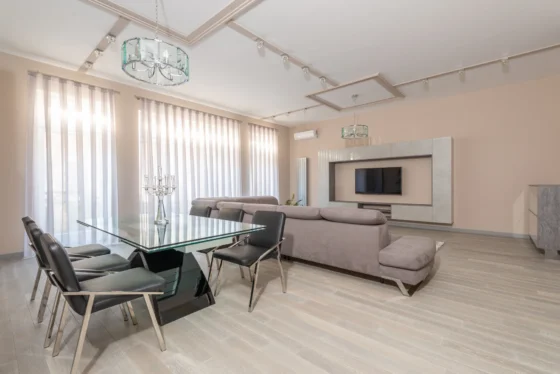
That gap matters when a living room becomes an office, a dining room and, later, a place for friends to gather. A home changes character throughout the day. The invisible services behind its walls need to accommodate those changes as carefully as the furniture does.
In a July 2026 account of its ventilation approach, Fakhruddin Properties describes using carbon-dioxide and occupancy sensors to adjust fresh-air delivery. The principle, known as demand-controlled ventilation, sits within the developer’s broader Treppan Living proposition. Its most interesting promise is responsiveness: recognising that a space with several people in it has different demands from an empty one.
For residents, the useful question is how that principle translates into a particular home, with its particular habits and maintenance arrangements.
What the thermostat cannot tell you
Cooling, ventilation and filtration perform different jobs. The US Environmental Protection Agency’s guidance explains that many domestic heating and cooling systems do not themselves introduce outdoor air. Ventilation brings air into and out of a space; extracting pollutants near their source, such as through a kitchen exhaust that vents outside, is another important part of the picture.
This helps explain why turning the temperature down is an incomplete response to an air-quality concern. Before buying another appliance, it is worth understanding the route air takes through the home. Where does fresh air enter? Where is air extracted? Who checks those routes remain effective?
Opening a window can help when outdoor conditions are suitable. It is not an all-weather answer. Heat, humidity, dust and nearby pollution make the quality and treatment of incoming air relevant too. The engineering task is to reconcile these conditions rather than ask residents to choose between comfort and ventilation.
Filtration adds another layer. The EPA’s separate guide to air cleaners describes portable units as serving a room or area and central filters as working within a home’s air-handling system. Neither removes every pollutant. A purifier’s presence therefore says less than its suitability, placement and upkeep.

A home that responds to its occupants
Demand control offers a way to stop treating every hour as if it were the same. Fakhruddin’s published description proposes increasing fresh-air supply when occupancy rises and reducing it when spaces are less occupied. It also describes potential energy benefits, although a saving in any individual building would need measurement rather than a borrowed percentage.
The idea belongs to a wider movement in building design. In Britain, the Passivhaus Trust’s building-services guide places ventilation, commissioning and noise control at the centre of a well-performing home. Its mechanical ventilation with heat recovery supplies and extracts air through separate routes while recovering heat. This is a different design approach, not evidence that a Treppan property meets Passivhaus standards. The shared lesson is that fresh air deserves deliberate engineering, rather than being left to chance.
There is a human side to that technical discipline. Equipment that is too noisy invites interference. Controls that nobody explains invite guesswork. A system should be understandable to the person paying the service charge and to the technician who will maintain it years after handover.
Make the invisible understandable
Sensors can help, provided their numbers come with context. In its workplace guidance on carbon-dioxide monitors, Britain’s Health and Safety Executive cautions that a single reading can mislead. Placement, occupancy and readings over time matter; the measurements offer a broad guide to ventilation, not a declaration that a room is safe from every airborne hazard.
For a resident, the most reassuring demonstration would therefore go beyond a green icon on an app. It would show what the sensor measures, which equipment responds and how a fault reaches someone who can fix it. A maintenance record is less glamorous than a touchscreen, but considerably more useful when something stops working.
Treppan’s ventilation story has the potential to make this usually hidden part of housing easier to discuss. The test is pleasantly ordinary: can a family understand what its home does, and trust that someone is looking after it? Fresh air becomes meaningful when it is part of a dependable service, not another task on the household’s evening list.