Treppan Magazine
  • Home
  • Better You
    • Health
    • Wellness
    • Fitness
    • Sleep
  • Better Life
    • Community
    • Food & Cooking
    • Arts & Culture
    • Travel
    • Automation
    • Artificial Intelligence
  • Better Planet
    • Conservation
    • Waste & Resources
    • Climate
  • Your Neighbourhood
  • About
Treppan Magazine
Treppan Magazine
  • Home
  • Better You
    • Health
    • Wellness
    • Fitness
    • Sleep
  • Better Life
    • Community
    • Food & Cooking
    • Arts & Culture
    • Travel
    • Automation
    • Artificial Intelligence
  • Better Planet
    • Conservation
    • Waste & Resources
    • Climate
  • Your Neighbourhood
  • About
  • Better Planet
  • Waste & Resources

How Panama City’s River Cleanup Aims to Keep Plastic Out of the Sea

  • October 4, 2026
Workers remove captured material beside a river interception barrier in the supplied Panama City project photographs.
Workers remove captured material beside a river interception barrier in the supplied Panama City project photographs. Courtesy Kia / The Ocean Cleanup.
Total
0
Shares
0
0
0

In Panama City, a river-cleanup partnership shows why a cleaner coastline begins well upstream, with local knowledge and reliable waste systems.

An ocean-cleanup story can begin far from an open-water horizon. In Panama City, it begins in urban rivers: places where the daily life of a city meets the movement of water towards the coast. Catching waste here offers a chance to interrupt its journey before it spreads into the Bay of Panama.

The Seven Basins Project brings together Panamanian nonprofit Marea Verde and The Ocean Cleanup. Announced by the latter in March 2025, the partnership aims to tackle waste flowing through seven major river systems. Its design combines Marea Verde’s local experience with the international organisation’s interception technology.

A media update circulated by corporate supporter Kia in August 2026 brought the project back into view. It named Interceptor 022 on the Río Abajo and Interceptor 025 on the Río Matías Hernández among the deployments. The useful protagonists are the local organisation, the people maintaining the systems and the communities living beside the waterways.
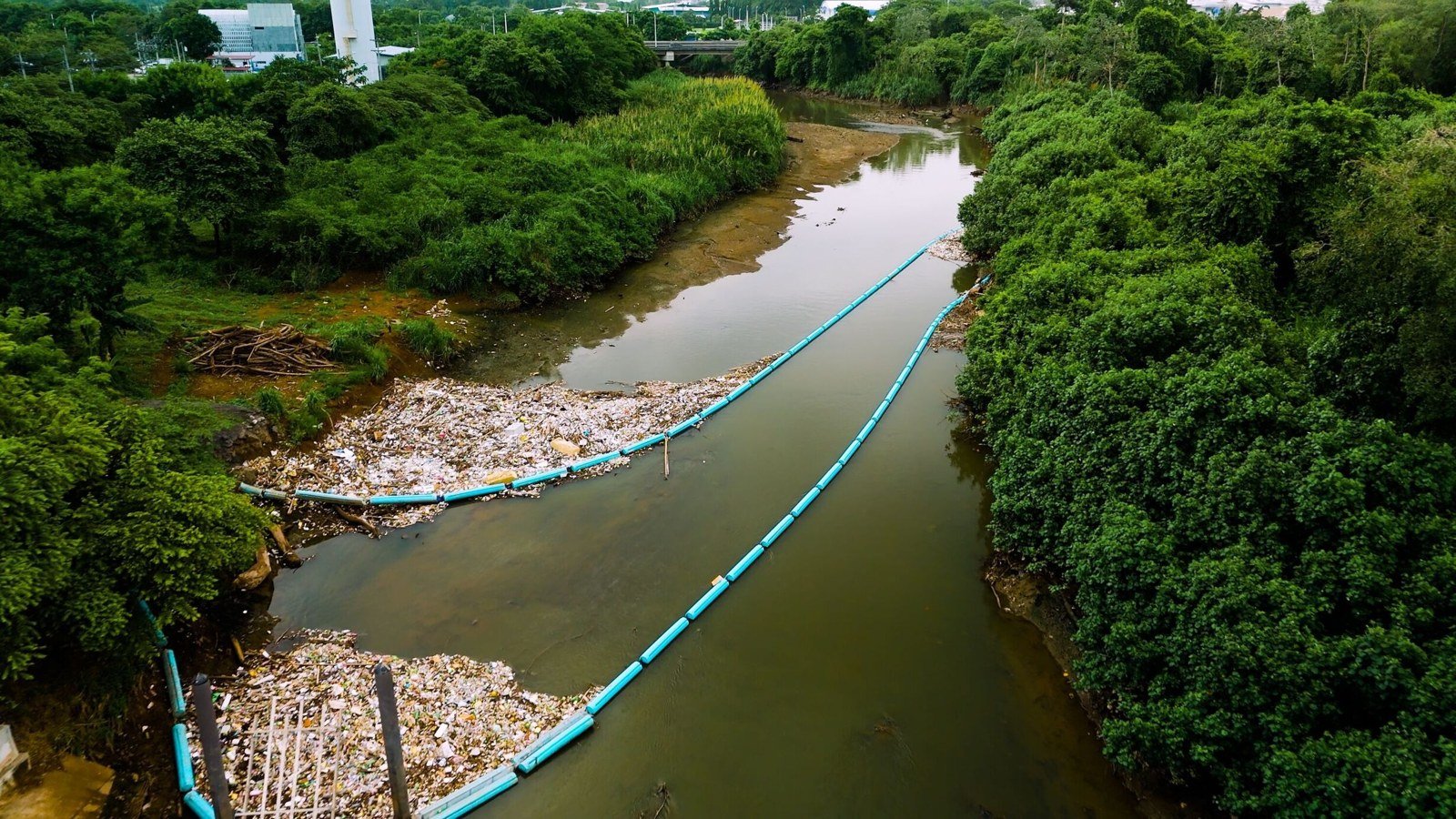
Floating blue interception barriers retaining waste in a Panama City river
River interception barriers in the Panama City project imagery supplied by Kia and The Ocean Cleanup. Courtesy Kia / The Ocean Cleanup.

A river is part of a city

The Ocean Cleanup’s account of the project describes the Bay of Panama as an area of important mangroves and other ecosystems affected by waste pollution. The rivers connect those habitats to neighbourhoods upstream. Looking at one without the other leaves out part of the problem.

An interception system has a clear job: to help capture material already travelling through a waterway. Its wider value depends on what happens around that point. Collected waste must be removed from the equipment, handled and taken to an appropriate destination. Systems must keep working through changing conditions. Upstream collection and prevention remain important because the best place to stop an item becoming litter is before it enters a river.

That makes local partnership more than a line in a sponsorship announcement. A city-wide effort needs people who know the waterways, understand community concerns and can connect an installation to the practical services around it. The Seven Basins Project explicitly includes environmental education alongside interception.

Keep ambitions separate from results

The August update set out annual aims of preventing more than 800,000 kilograms of waste reaching the sea and recovering at least 100,000 kilograms of plastic. These are targets. The material reviewed for this article does not establish that those annual quantities have already been achieved.

The distinction between waste and plastic is equally useful. A total of mixed material collected from a river is not automatically a total of plastic, and collection does not automatically mean recycling. Wet material, organic matter and different types of packaging can take different routes after removal. A good progress report makes the categories and destinations clear.

The Ocean Cleanup’s 2025 review confirms the partnership’s focus on Panama’s seven basins. It provides context for the programme’s development, rather than an independent verification of every claim in the later sponsor update. Transparent, locally specific reporting will be important as more waterways are included.
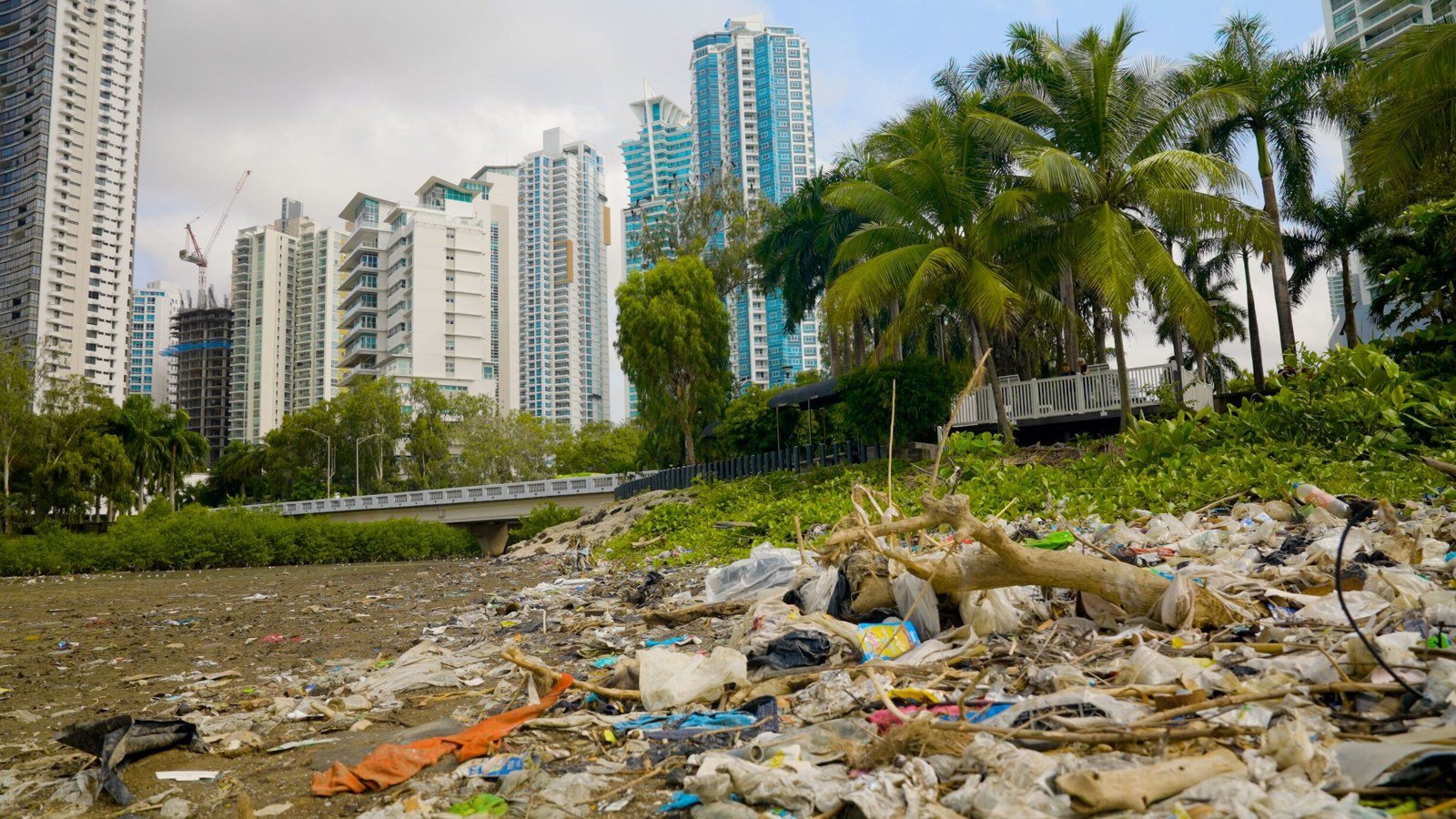
Discarded plastics and other waste beside a river below city buildings
Waste beside a Panama City waterway, photographed for the project’s supplied media material. Courtesy Kia / The Ocean Cleanup.

What a useful success story looks like

For readers following cleanup projects anywhere, a few questions bring the story into focus. What was collected, from which location and over what period? Where did it go? Is the same measurement method used from one update to the next? How are residents and local waste services involved?

These questions help a project become more understandable rather than less inspiring. They reveal the operational work behind a photograph of rubbish being lifted from water, and give the people doing that work a fairer way to show progress.

Panama City’s approach offers a compelling idea: treat the rivers as a connected urban system, and make local knowledge part of the response. The next chapter will be written through maintained equipment, better services and evidence that less waste is making the journey to the sea.

Lead image: Workers remove captured material beside a river interception barrier in the supplied Panama City project photographs. Courtesy Kia / The Ocean Cleanup.


Total
0
Shares
Share 0
Tweet 0
Pin it 0
Previous Article
Pale mosaic and marble hammam with a central stone platform, striped cloth and a robed model beside an arched doorway.
  • Better You
  • Wellness

Hammam Treatments and Spa Facilities at Tivoli LA VIE Muscat

  • October 4, 2026
Read story
Next Article
Illustrated adult sitting on a bench to tie a walking shoe beside a quiet garden path.
  • Better You
  • Fitness

How to Return to Exercise after a Break

  • October 4, 2026
Read story
You May Also Like
Qadreya Al Awadhi in a black abaya, standing against a pale background
Read story
  • Better Planet
  • Waste & Resources

Qadreya Al Awadhi: What Local Food Means at the Family Table

  • ssharaf
  • October 8, 2026
A vessel structure at Drydocks World in Dubai, in an image supplied with its July 2026 ship recycling announcement.
Read story
  • Better Planet
  • Waste & Resources

How Ships Are Recycled: Recovering Materials and Managing Hazardous Waste

  • Treppan Magazine
  • October 4, 2026
Kushiyaki Wagyu beef skewers at The Langham, Gold Coast, in an image supplied with the group’s kitchen upcycling announcement.
Read story
  • Better Planet
  • Waste & Resources

How Hotel Kitchens Turn Food Trimmings into New Dishes

  • Treppan Magazine
  • October 4, 2026
Low water at Lake Mead in an archival photograph taken on 13 June 2010. The image illustrates drought and does not show current conditions.
Read story
  • Better Planet
  • Climate

Preparing for Drought before the Crisis

  • Treppan Magazine
  • October 4, 2026
A Red Sea Global resort villa at dusk, supplied with the DarkSky certification announcement.
Read story
  • Better Planet
  • Conservation

How Responsible Outdoor Lighting Protects Wildlife and Dark Skies

  • Treppan Magazine
  • October 4, 2026
Steppe in Mongolia’s Gorkhi-Terelj National Park, photographed in June 2011. An illustrative archive landscape, not one of the restoration sites described.
Read story
  • Better Planet
  • Conservation

How Mongolia’s Herders and Researchers Restore Grasslands

  • Treppan Magazine
  • October 4, 2026
An underwater survey image supplied with Soneva Jani’s OECM announcement.
Read story
  • Better Planet
  • Conservation

Soneva Jani’s Conservation Area: What the Designation Means

  • Treppan Magazine
  • October 4, 2026
White rhinos in a photograph supplied with Anantara’s Victoria Falls conservation announcement.
Read story
  • Better Planet
  • Conservation

The Conservation Work behind Rhino Relocation in Zimbabwe

  • Treppan Magazine
  • October 3, 2026
Tréppan Living

Ideas for a Better Everyday.

Tréppan Magazine explores wellbeing, useful technology, culture and sustainable living. Rooted in the UAE and open to the world, with a thoughtful perspective on how we care for ourselves, our homes and the planet.

Inspired by Tréppan Living’s conscientious commitment to Culture, Community, Commerce and Connection.

Our Story
Our Philosophy
Our Editorial Approach

Explore the Magazine
Better You
  • Health
  • Wellness
  • Fitness
  • Sleep
Better Life
  • Community
  • Food & Cooking
  • Arts & Culture
  • Travel
  • Automation
  • Artificial Intelligence
Better Planet
  • Conservation
  • Waste & Resources
  • Climate
Connect

For editorial enquiries, story ideas and collaborations.

info@treppanmagazine.com

Treppan Living
Office 1405, 14th Floor
Lake Central Tower
Marasi Drive, Business Bay
Dubai, United Arab Emirates

Contact Us & Find Us
Discover Tréppan Living ↗

Treppan Magazine
  • All Stories
  • About Tréppan Magazine
  • Contact Us
Better You. Better Life. Better Planet.

Input your search keywords and press Enter.