Making a drink is a sequence of small decisions: finding a cup, gripping it without crushing it, choosing the right ingredient and knowing when to stop pouring. For a person behind a counter, much of that work feels routine. For a robot, the difference between repeating a sequence and coping with a changed situation is substantial.
Two projects from Turin-based Makr Shakr make that distinction unusually visible. Toni Barista is a purpose-built robotic coffee system. Robi is a humanoid robotics project being developed with Politecnico di Torino. They share a hospitality setting, but they should not be mistaken for the same kind of machine or the same stage of development.
A Counter Built around a Task
In its 17 June 2026 announcement, Makr Shakr described Toni Barista as a modular system with 12 ingredient slots, three coffee dispensers, two milk machines and an ice module. Orders are placed digitally and a robotic arm performs the preparation sequence in view of guests.
The appeal is partly practical and partly theatrical. A counter can be arranged so that cups, ingredients and equipment occupy predictable positions. Watching the arm move makes the process part of a café experience, rather than hiding it inside a vending machine.
The announcement associated Toni Barista with The Suite Lab, a Turin venue that opened on 15 June. It also said the first cups were still to come. That is an announcement of the intended installation, not proof of its present operating timetable. This article is not a recommendation to visit a currently verified service, nor a hands-on test of its coffee.
Teaching a Machine a Human Movement
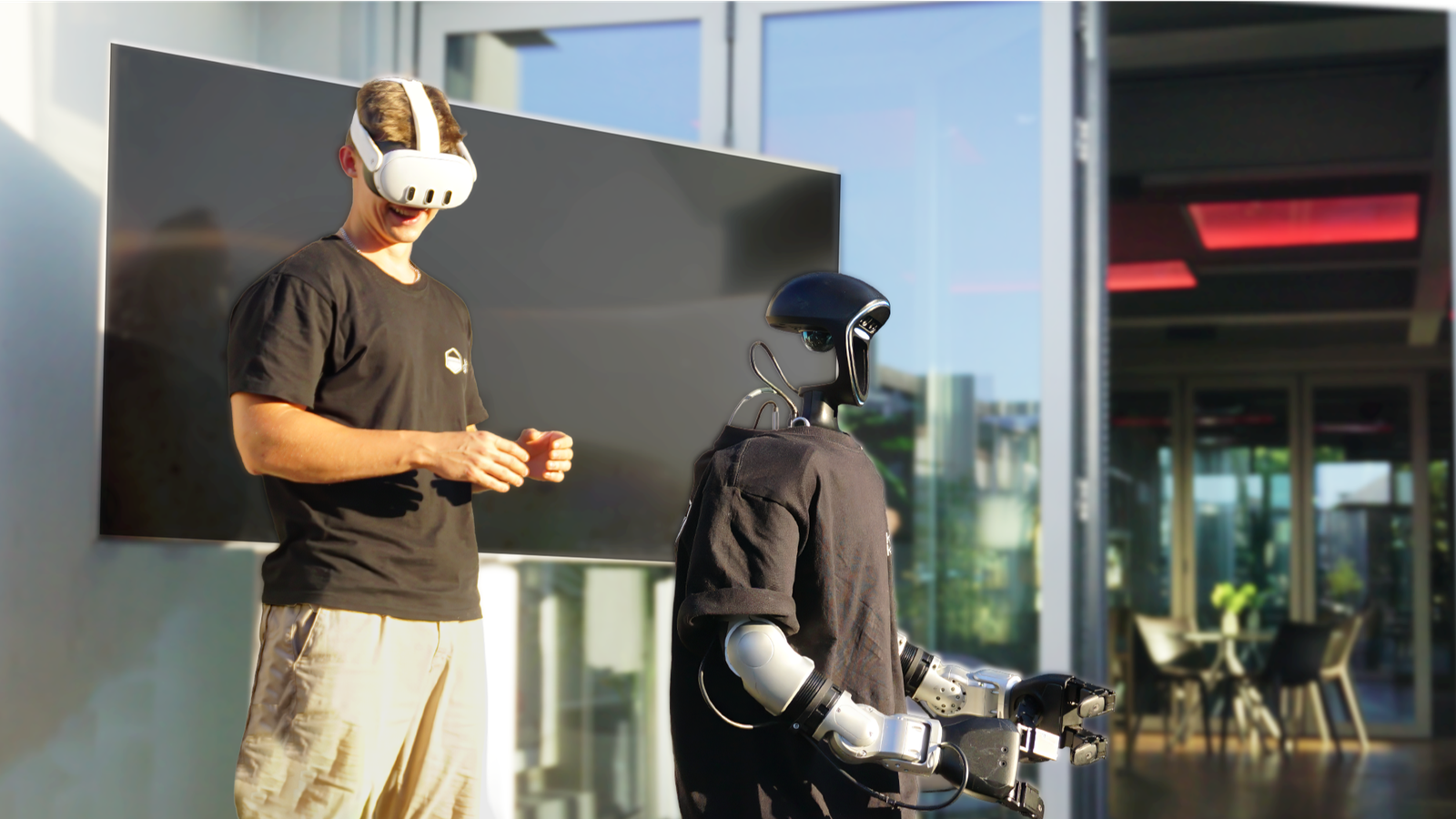
Robi tackles a different problem. According to Makr Shakr’s June newsletter, an operator uses virtual-reality-assisted teleoperation to guide movements. Those demonstrations contribute to a collection of actions the system can learn from and later reproduce.
A human hand and a robot hand do not have identical joints or proportions. The company describes software that translates the operator’s movements into corresponding robot positions, a process known as kinematic retargeting. Copying a gesture therefore involves interpretation, not simply replaying a video.
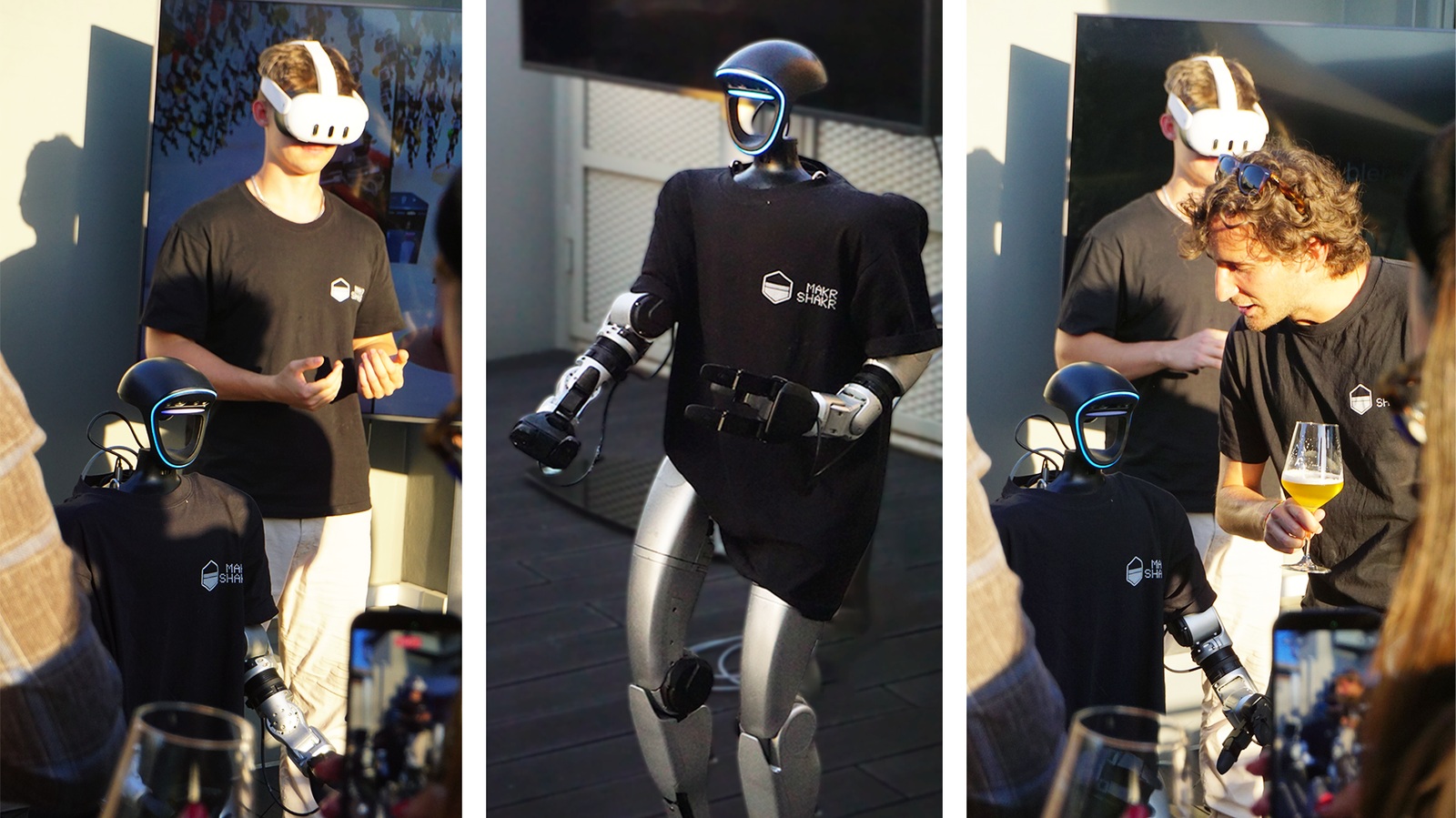
The company’s current Robi description still presents work in development, including force control, imitation learning and responding to surroundings. Those are engineering aims, not independent evidence that a humanoid can run an unpredictable hospitality shift without help.
Why the Ordinary Details Are Difficult
A Politecnico di Torino research brief supported by Makr Shakr explains the wider challenge: industrial robots often work with known tools in structured environments, while food and drink preparation involves changing objects, obstacles and sequences of actions. Both perception and movement remain difficult when the surroundings are not fixed in advance.
For a café guest, that means a smooth demonstration is only one part of the picture. Useful questions include how staff deal with a missing cup, a wrong order or a spill; who cleans and replenishes the system; and when an operator must step in. A machine’s ability to repeat a pour does not answer all those questions.
The same caution applies to ingredient handling. The Toni announcement describes separate milk equipment, but this feature alone should not be treated as an independently verified assurance about allergen cross-contact. Anyone who needs an ingredient or preparation detail confirmed should ask the venue’s staff about the actual process.
The Human Skill behind the Machine
The most interesting part of this café future may not be the absence of people. It is how much human knowledge must first be made explicit: where to hold a vessel, how to coordinate a movement and when a familiar routine needs to change.
A useful hospitality robot should be judged by the service it helps deliver, including its limits and the people supporting it. Toni and Robi offer two ways into that question: organise a task so a machine can repeat it, or teach a machine to handle more of the variability that people already navigate.
Development status checked on 3 November 2026. The article draws on the June announcement and subsequent primary-source descriptions, not an attended demonstration or product test.