Treppan Magazine
  • Home
  • Better You
    • Health
    • Wellness
    • Fitness
    • Sleep
  • Better Life
    • Community
    • Food & Cooking
    • Arts & Culture
    • Travel
    • Automation
    • Artificial Intelligence
  • Better Planet
    • Conservation
    • Waste & Resources
    • Climate
  • Your Neighbourhood
Treppan Magazine
Treppan Magazine
  • Home
  • Better You
    • Health
    • Wellness
    • Fitness
    • Sleep
  • Better Life
    • Community
    • Food & Cooking
    • Arts & Culture
    • Travel
    • Automation
    • Artificial Intelligence
  • Better Planet
    • Conservation
    • Waste & Resources
    • Climate
  • Your Neighbourhood
  • Better Planet

How a Kashmiri weaving code shaped a second life for reclaimed timber in Dubai

  • October 30, 2026
Design image of VARUSSI’s Taleem installation for Abwab, supplied by Faham.
Total
0
Shares
0
0
0

There are two ways to pass on the pattern of a shawl. You can hand someone the finished cloth. Or you can give a weaver the instructions for making it again. Kashmiri architects Owais Asif Khan and Samreen Junaid Wani began with that second possibility when they designed Taleem for Dubai Design Week. In place of yarn they had a supply of used beams and planks. The people encountering the pattern would be able to walk inside it.

The architects work together in Dubai as VARUSSI. Even the name has a material history: in Kashmiri it refers to a timber partition. Their contribution to In Other Words, the five-practice Abwab exhibition at Dubai Design District from 3 to 8 November, brought that architectural inheritance together with a different kind of workshop knowledge.
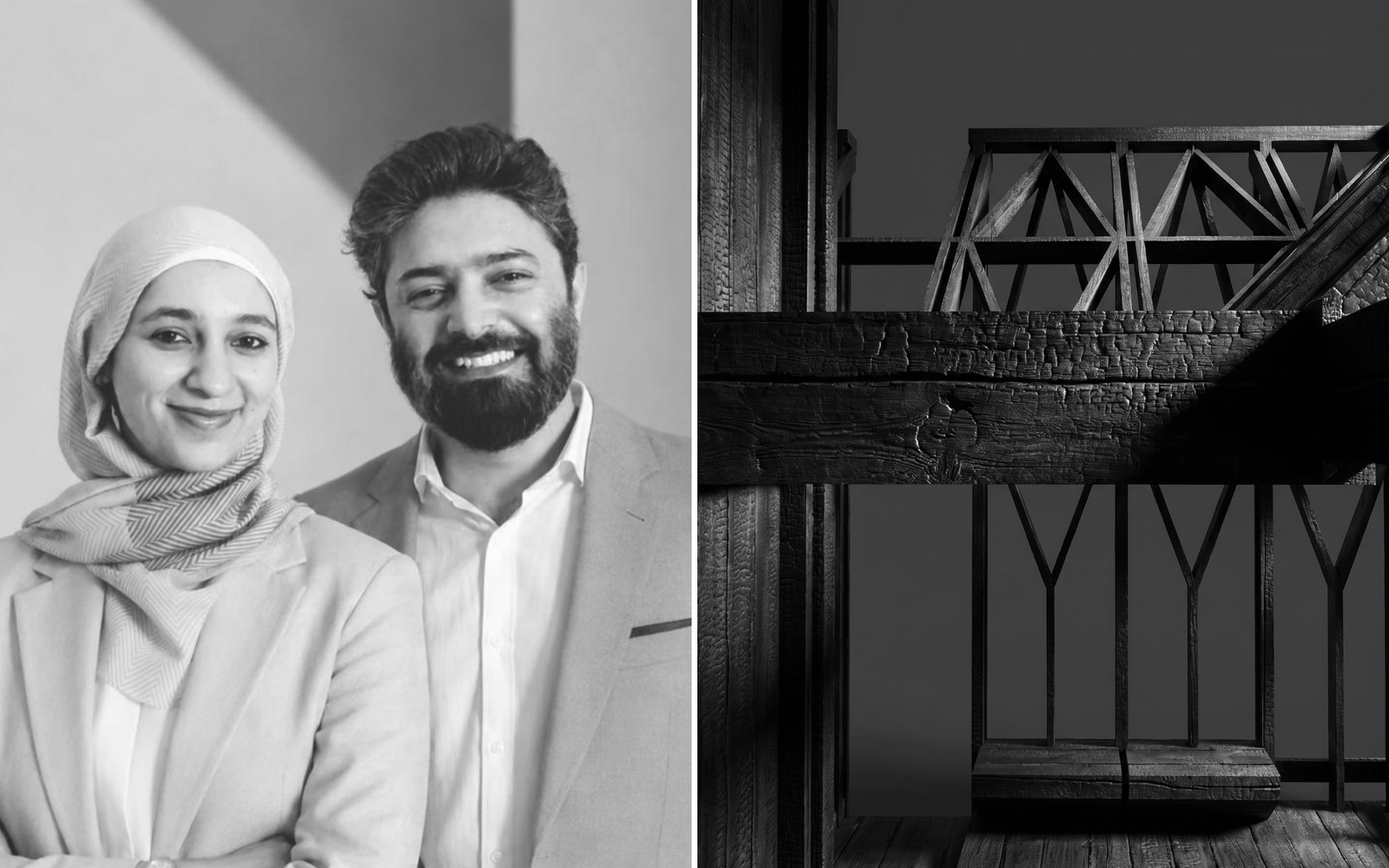
Varussi founders and Taleem timber design
VARUSSI founders Samreen Junaid Wani and Owais Asif Khan alongside a design view of Taleem. The diagonal members repeat across the upper frame. Image courtesy of Dubai Design Week.

What the weaver knows

In Kashmiri carpet and Kani shawl making, taleem is a system of notation shared by the person devising a pattern and the person weaving it. It gives the maker a sequence to follow. A completed textile lets us see where a colour or shape returns. The notation holds something harder to see once the piece is finished: the order of work that put the repeat there.

The architects took that distinction seriously. In the design view, a long horizontal beam cuts across the frame. Above it a series of diagonals makes a rhythm that the eye can follow from bay to bay. Below, upright members and their shadows make a second pattern. A person moving past the frame would see different pieces line up at each step. Repetition, usually read across the face of a textile, has acquired depth.

After the last visitor

Faham supported the installation with material, and the wood was sourced, fabricated and assembled in the UAE. Reclaimed timber had already done one job before it entered the exhibition. The more interesting decision concerned its third use. VARUSSI designed the structure in modules that could come apart and go back together. A beam recovered intact carries forward the work already spent choosing it, sizing it and fitting it to its neighbours.

The exhibition closed on 8 November. The organisers describe how the structure can be reassembled, although their project account gives no subsequent site or measured quantity of waste avoided. For anyone commissioning a temporary stand, the practical question survives the show. When dismantling begins, who will have the pieces, and who will know the order in which they fit?
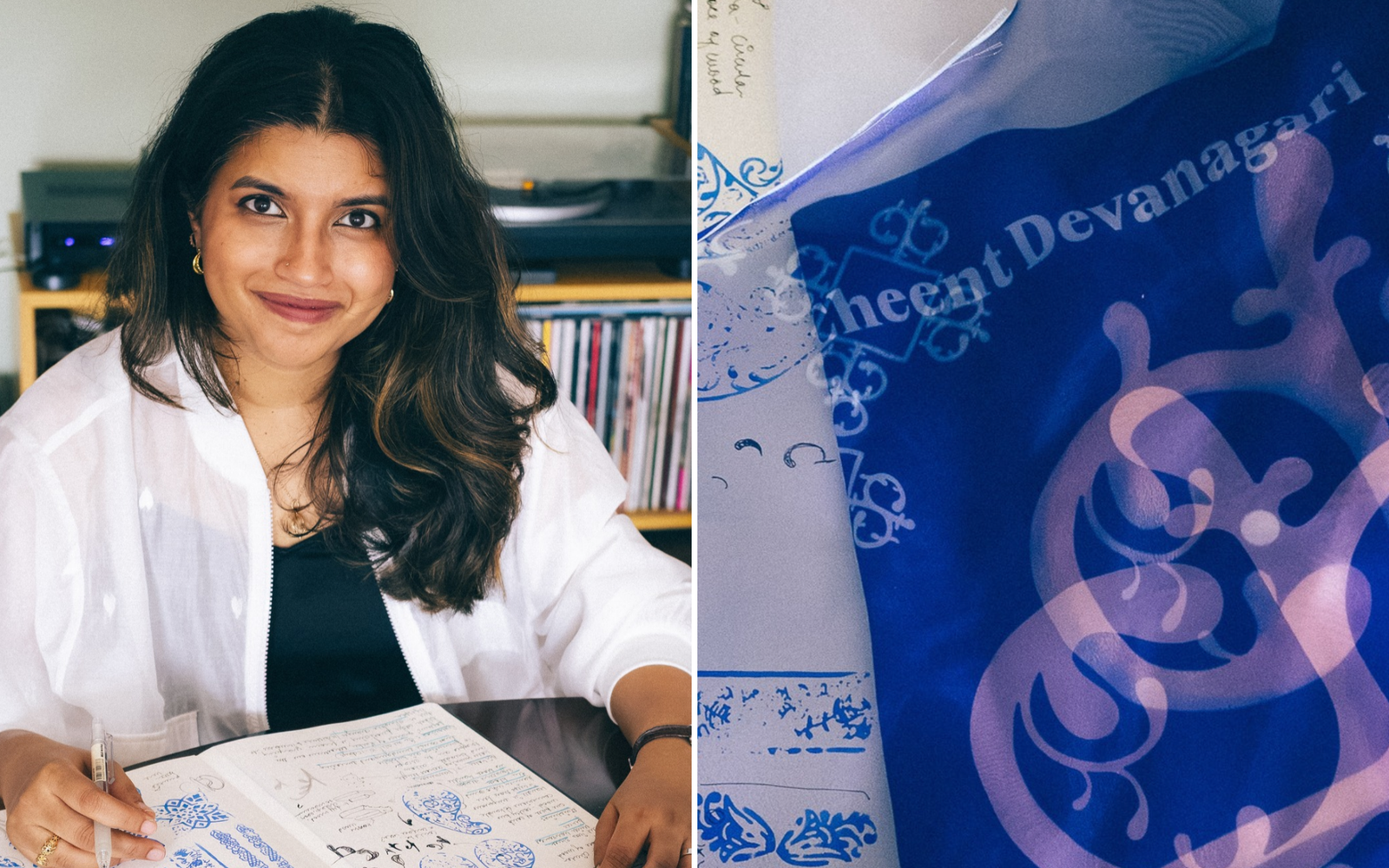
Kanaka Raghavan and Cheent Devanagari textile lettering
Kanaka Raghavan and a detail from Cheent Devanagari, another Abwab commission, which explored lettering through layers of printed fabric. Image courtesy of Dubai Design Week.

Elsewhere in the same exhibition, Kanaka Raghavan separated Devanagari letterforms across translucent, block-printed textiles. Move around the layers and parts of a letter drift apart or fall into alignment. It makes a revealing companion to Taleem. Raghavan used cloth to ask how we recognise a written sign. VARUSSI used a weaver’s signs to ask how we might build something a second pair of hands can put together again.

Lead design image courtesy of Faham. Explore the project notes and the Abwab exhibition at Dubai Design Week.

Total
0
Shares
Share 0
Tweet 0
Pin it 0
Previous Article
Three humanoid robots on the stage at Galaxy Robot Arena Dubai, with the cinema audience in front.
  • Automation
  • Better Life

What Dubai’s Robot Arena Reveals About Entertainment Robots

  • October 29, 2026
Read story
Next Article
Panellists at the Clean Energy Business Council’s 14th annual summit in Dubai
  • Better Planet
  • Climate

What Did a Dubai Summit Count When It Called Itself Carbon Neutral?

  • October 31, 2026
Read story
You May Also Like
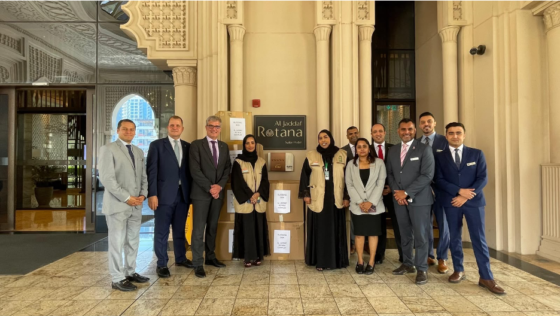
A group stands beside stacked donation boxes outside Al Jaddaf Rotana Suite Hotel.
Read story
  • Better Planet

Where the Clothes Guests Leave at Three Al Jaddaf Hotels Go

  • ssharaf
  • November 13, 2026
Bu, a brown bear, stands on a woodland path surrounded by green foliage.
Read story
  • Better Planet
  • Conservation

A Forest Home for Bu and Tyapa

  • ssharaf
  • November 13, 2026
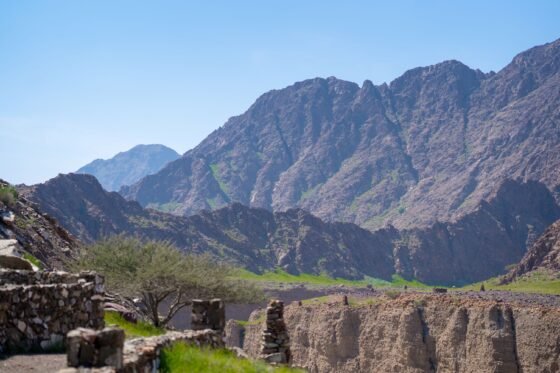
Native-tree monitoring programme in Wadi Wurayah, courtesy of Emirates Nature–WWF
Read story
  • Better Planet

A morning measuring native trees in Wadi Wurayah

  • ssharaf
  • November 13, 2026
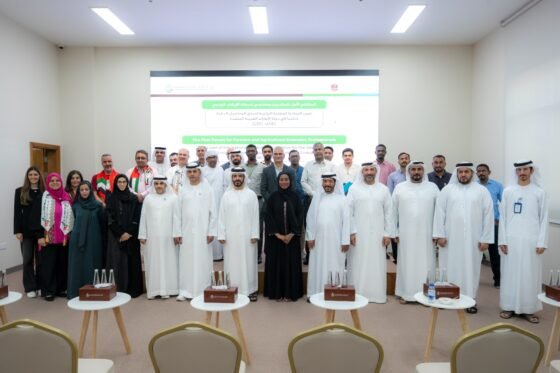
Group photograph from ICBA’s forum for farmers and agricultural extension professionals.
Read story
  • Better Planet

Four crops UAE farmers are preparing to grow, and what their harvests could tell us

  • ssharaf
  • November 5, 2026
A person handles a yellow garment at a table covered with clothes.
Read story
  • Better Planet
  • Waste & Resources

What Happens to Donated Clothes After They Leave Your Wardrobe?

  • ssharaf
  • November 3, 2026
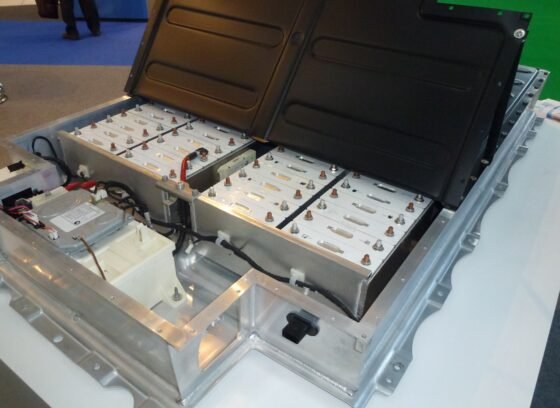
An open BMW i3 battery pack with modules visible at a trade exhibition.
Read story
  • Automation
  • Better Planet
  • Waste & Resources

What Happens to an Electric Car Battery When the Car Is Done?

  • ssharaf
  • November 3, 2026
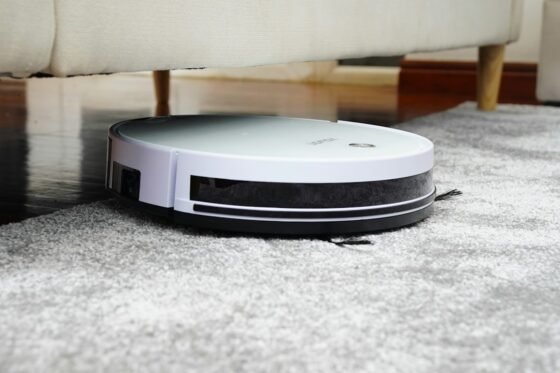
A white robot vacuum on a rug beside a sofa.
Read story
  • Better Planet
  • Waste & Resources

What Happens When a Robot Vacuum Reaches the End of Its Life?

  • ssharaf
  • November 3, 2026
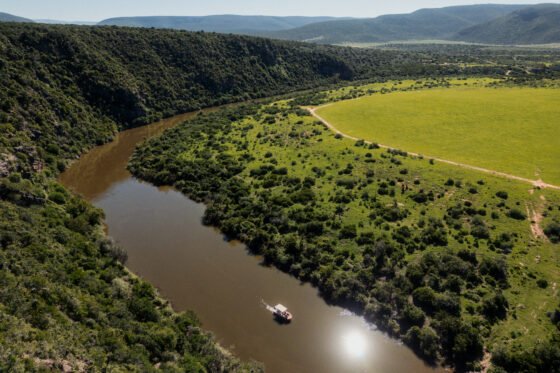
A winding river through fields and wooded hills at Shamwari Private Game Reserve
Read story
  • Better Planet
  • Conservation

From Farmland to Wilderness: Shamwari’s Conservation Story

  • ssharaf
  • November 3, 2026
Latest Stories
  • Abu Dhabi Awards and Sharjah International Book Fair emblems.
    • Better Life
    Who Would You Nominate for an Abu Dhabi Award?
  • A group stands beside stacked donation boxes outside Al Jaddaf Rotana Suite Hotel.
    • Better Planet
    Where the Clothes Guests Leave at Three Al Jaddaf Hotels Go
  • Cover of the DC Comics book You’re a Superhero!
    • Better Life
    Azie Tesfai’s New Comic Finds Superheroes on a Child’s Bus Route
  • Terra Junior Rangers programme at Expo City Dubai.
    • Better Life
    A Thursday in the Garden With Terra Junior Rangers
Treppan Living News
  • Open window in a sunlit room overlooking city buildings
    • Our Initiatives
    Why a Comfortable Home Needs Fresh Air, Not Just Cold Air
  • Blue, green, red and white recycling containers outdoors.
    • Our Initiatives
    Where Does Your Bin Bag Go?
  • Illustrative greenhouse café concept for Treppan Greenhouse Café at Maimoon Gardens, JVC; not a photograph or confirmed design of the premises.
    • Our Initiatives
    A Café Worth Staying Close to Home For
  • White cup of black coffee surrounded by coffee beans
    • Our Initiatives
    Could a Better Habit Buy Your Next Coffee
  • White physical light-control panel on a pale wall
    • Our Initiatives
    The Smart Home Should Give You Less to Think About
About Treppan Magazine
Thoughtful reads for Better You, Better Life and Better Planet. Practical ideas for living well, making everyday life easier and caring for the world around us.
Our story
Tréppan Living

Ideas for a Better Everyday.

Tréppan Magazine explores wellbeing, useful technology, culture and sustainable living. Rooted in the UAE and open to the world, with a thoughtful perspective on how we care for ourselves, our homes and the planet.

Inspired by Tréppan Living’s conscientious commitment to Culture, Community, Commerce and Connection.

Our Story
Our Philosophy
Our Editorial Approach

Explore the Magazine
Better You
  • Health
  • Wellness
  • Fitness
  • Sleep
Better Life
  • Community
  • Food & Cooking
  • Arts & Culture
  • Travel
  • Automation
  • Artificial Intelligence
Better Planet
  • Conservation
  • Waste & Resources
  • Climate
Connect

For editorial enquiries, story ideas and collaborations.

info@treppanmagazine.com

Treppan Living
Office 1405, 14th Floor
Lake Central Tower
Marasi Drive, Business Bay
Dubai, United Arab Emirates

Contact Us & Find Us
Discover Tréppan Living ↗

Treppan Magazine
  • All Stories
  • About Tréppan Magazine
  • Contact Us
Better You. Better Life. Better Planet.

Input your search keywords and press Enter.